

Graphic Recordings of the IGdJ-Anniversary Conference
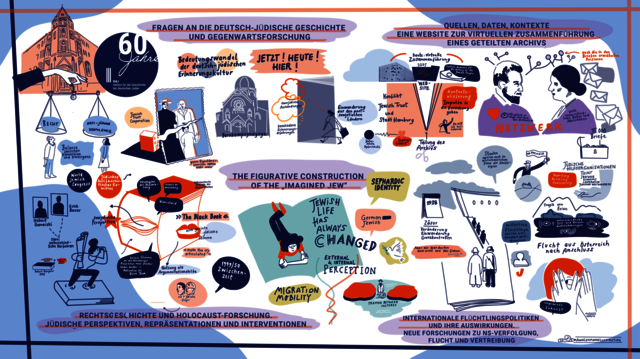
Research and education through graphic media are firmly established at the Institute for the History of the Jews (IGdJ). Text-and-image formats, such as comics, are particularly well-suited to expressing the history of Jewish-non-Jewish relations in all its complexity. As illustrated history enriches academic discourse in a unique way, the IGdJ anniversary conference “German-Jewish History in New Contexts” was accompanied by graphic recording. The drawings of the individual sessions, created by Anne Lehmann, visually summarise key points from the lectures and discussions, thereby also stimulating new debates.
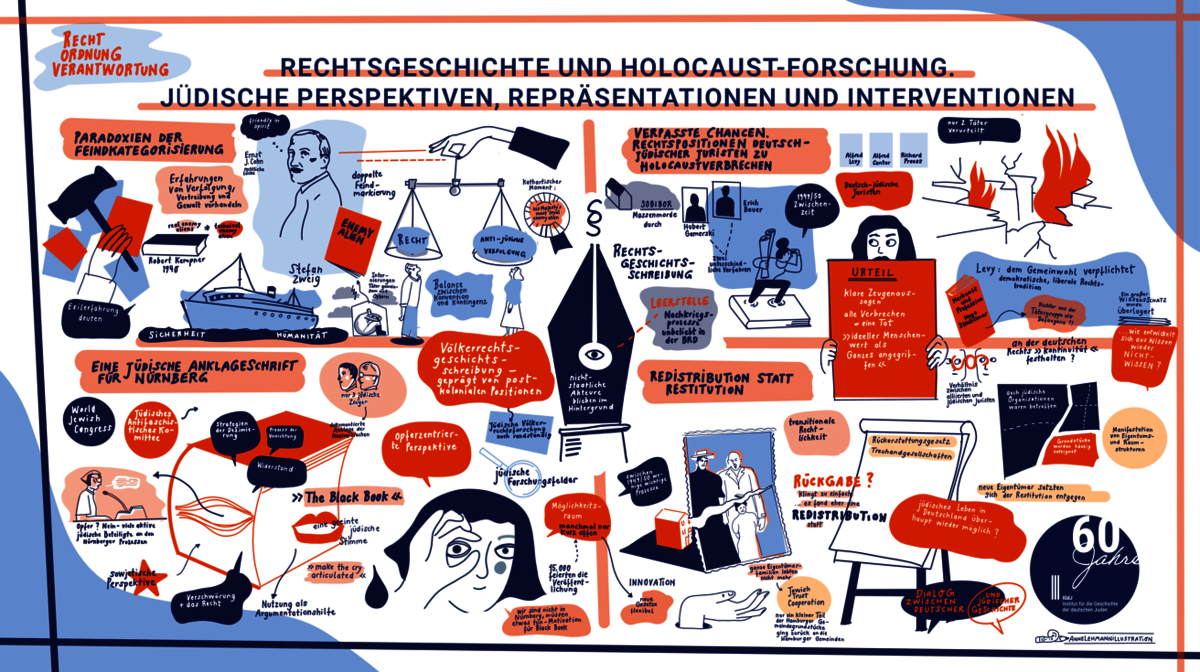
The section ‘Legal History and Holocaust Research: Jewish Perspectives, Representations and Interventions’ discussed initiatives that sought to promote Jewish representation within the legal sphere and the recognition of specific experiences of persecution. Other topics included the renegotiation of international legal standards governing the treatment of civilians in wartime in the face of an unprecedented Jewish refugee crisis, the legal positions of German-Jewish lawyers, the significant role of Jewish witnesses in early West German Holocaust trials, and the question of the restitution of property belonging to Jewish communities, set against the conflicting interests of survivors, the Allies and the West German post-war administration.
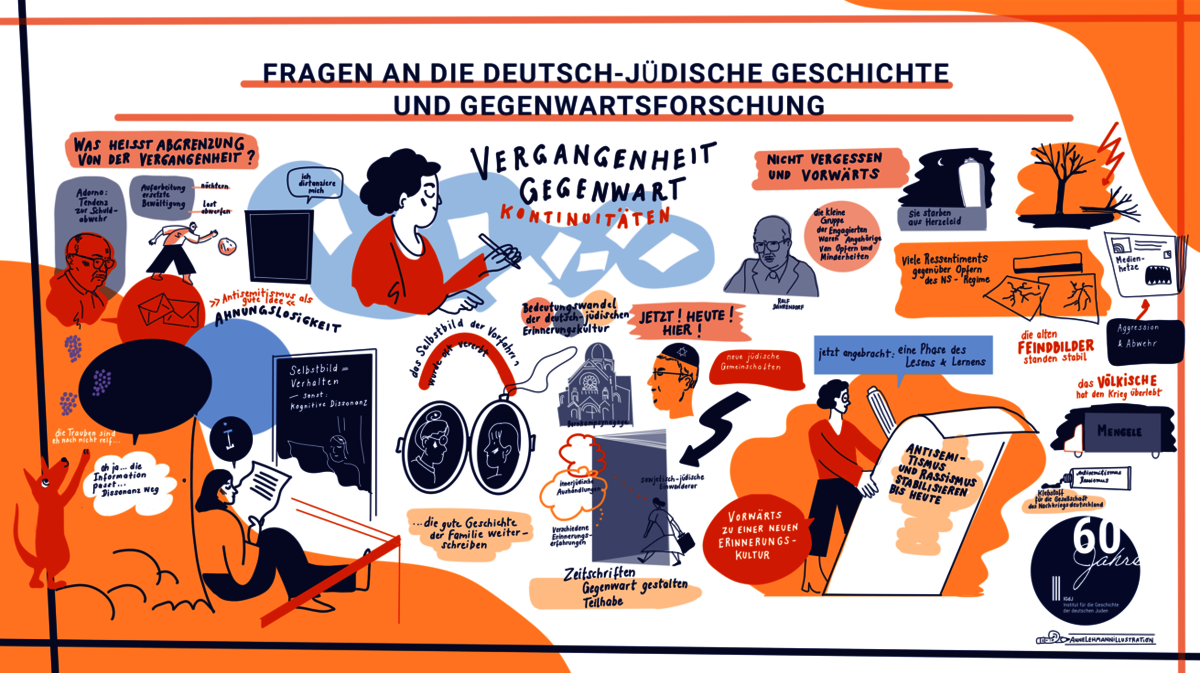
For some years now, the concept of the ‘Jewish present’ has dominated public and political discourse, where the term is used to distinguish itself from a perspective that turns its attention to the past and thus to history. The section ‘Questions on German-Jewish History and Contemporary Research’ examined these developments – also with regard to post-war German-Jewish history – and took an interdisciplinary look at the problems, challenges, possibilities and opportunities associated with this shift.
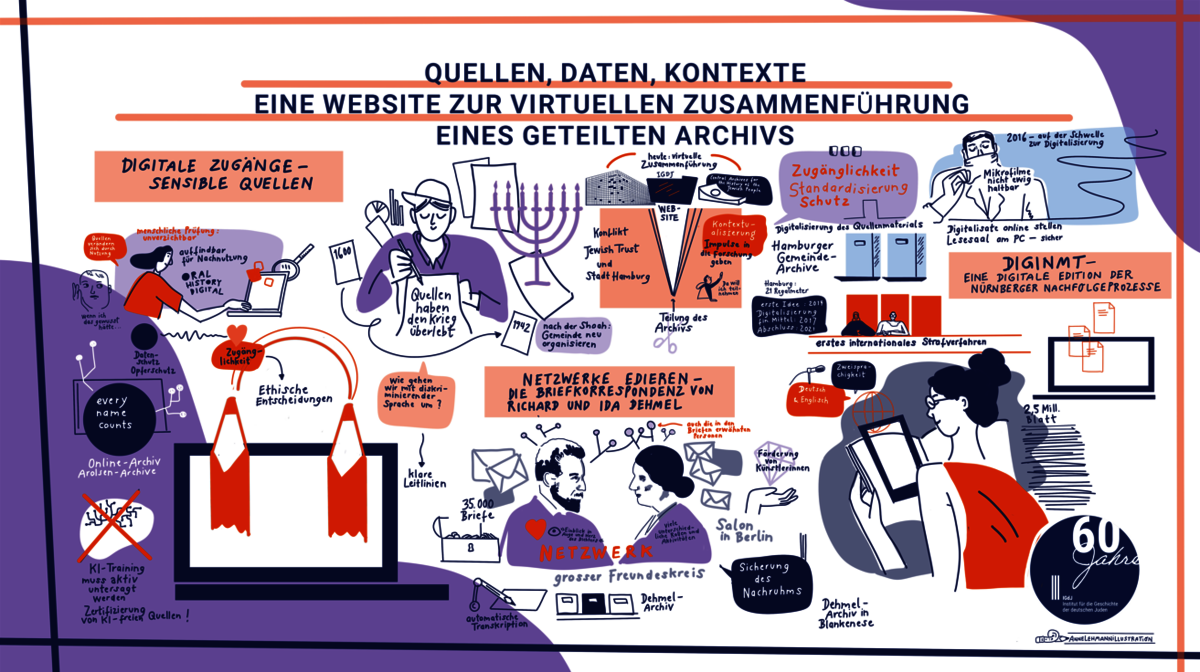
The “Sources, Data, Contexts” section presented the website for the virtual consolidation of a divided archive, developed by the IGdJ to support the digitisation projects at the Hamburg State Archives and the Central Archives for the History of the Jewish People in Jerusalem. Both institutions hold the records of the historic Jewish communities of Altona, Hamburg and Wandsbek. The history of the division of this archival collection, in turn, is closely linked to the founding history of the IGdJ. Presentations on ethical and legal challenges in the digital provision of sources on Jewish history and National Socialism, the ‘Dehmel Digital’ portal and the digital edition of the Nuremberg Military Tribunals (DigiNMT) explored broader questions for the digital humanities: How is archival work changing, and what new opportunities for research does digitisation offer, whilst also highlighting the limitations and challenges?
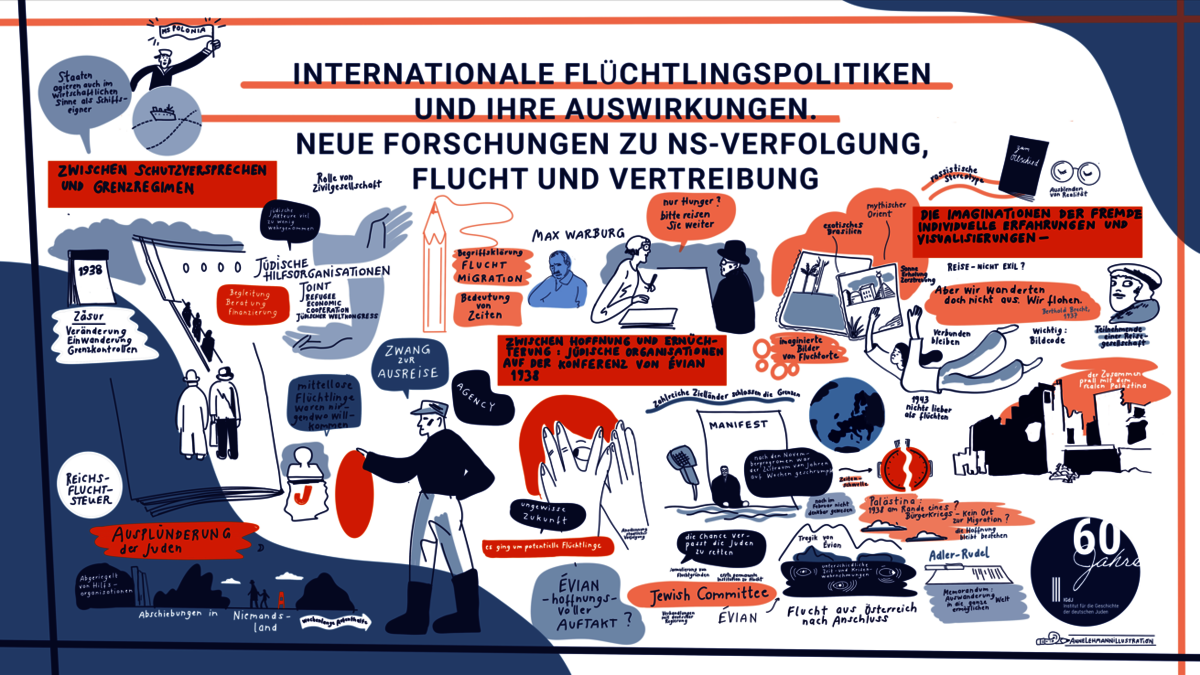
The section ‘International Refugee Experiences and their Impact: New Research on Nazi Persecution, Flight and Expulsion’ examined reactions to the exodus of Jews from Nazi Germany, the impact on the refugees themselves, and international efforts to find a ‘solution’ to the crisis. The role of aid organisations and the participation of Jewish representatives at the Évian Conference in July 1938 were also examined. An investigation into individual perceptions of foreign lands, using the examples of Brazil and the British Mandatory of Palestine, demonstrated how decisions to emigrate were influenced by both political conditions and personal perceptions and images conveyed by the media.
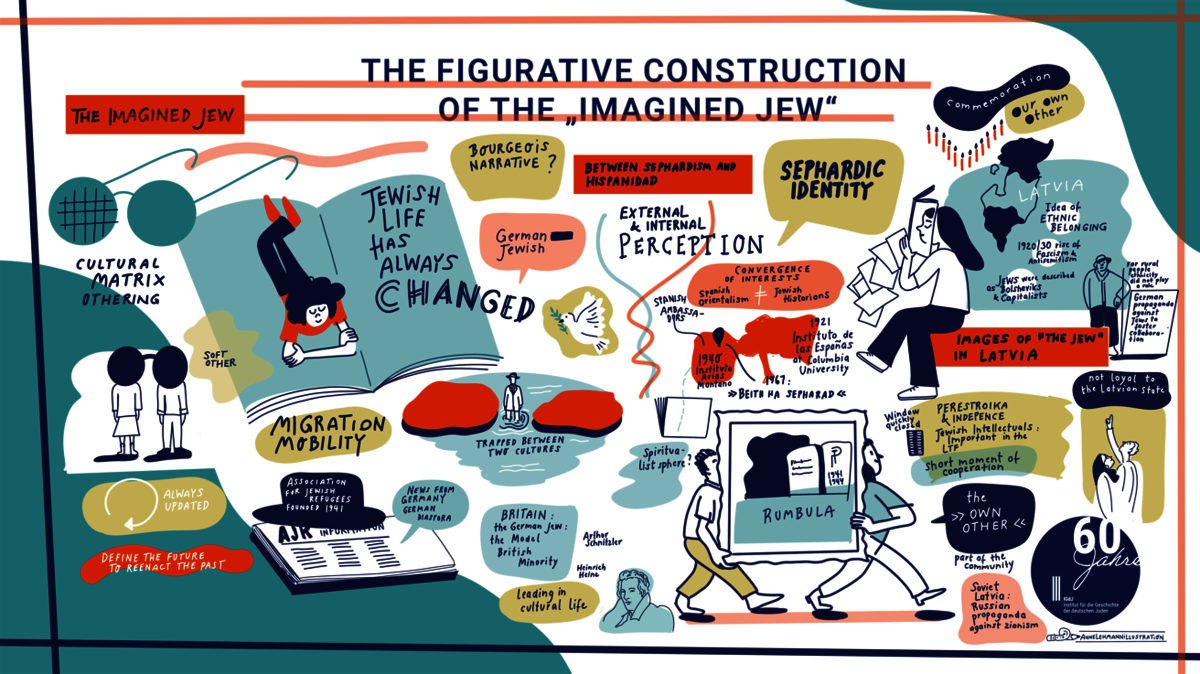
The section ‘The Figurative Construction of the “Imagined Jew”’ explored the theoretical framework of hyphenated identities. With regard to the United Kingdom, it was argued that the identity constructs of refugees and survivors of the Shoah were not merely individual coping mechanisms, but functioned as active instruments of political imagination. The development in Latvia from the late 1940s until the collapse of the Soviet Union was also examined, along with constructions of the ‘Imagined Jew’ at the intersection of Kremlin-driven antisemitism and local historical narratives. For Spain, the state of historiographical studies on the history of Iberian Jewry in the period following the victory of Franco’s supporters in the Spanish Civil War was analysed. The lecture demonstrated that the modern Spanish school of Hebrew studies was built upon theoretical premises previously established by Spanish Arabists.
Graphic Recording: Anne Lehmann
The conference programme with details of the individual presentations and the names of the speakers, can be found here: