


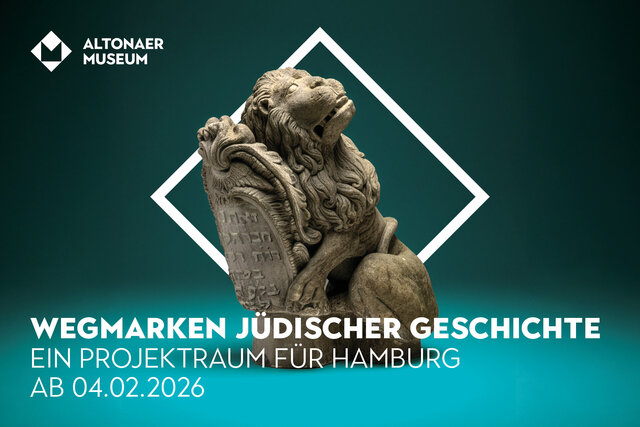
IGdJ contributes to exhibition and project space
With “Landmarks of Jewish History. A Project Space for Hamburg”, the Altonaer Museum presents a permanent exhibition in which the city's more than 400 years of Jewish history are presented in condensed form through 14 milestones. Hamburg's Jewish history dates back over 400 years. From the very beginning, it has been characterised by cultural, linguistic and religious diversity. This plurality is reflected in Hamburg's cityscape at numerous places. Jewish life in the formerly independent cities of Altona and Hamburg as well as in Wandsbek and Harburg was governed by different laws, with Altona's general privilege granting Jews extensive rights such as freedom of religion, freedom of trade and self-government as early as 1641. In Hamburg, too, Jewish history is marked by the struggle for self-assertion and civil rights, but also by the importance of the port associated with migration and trade.
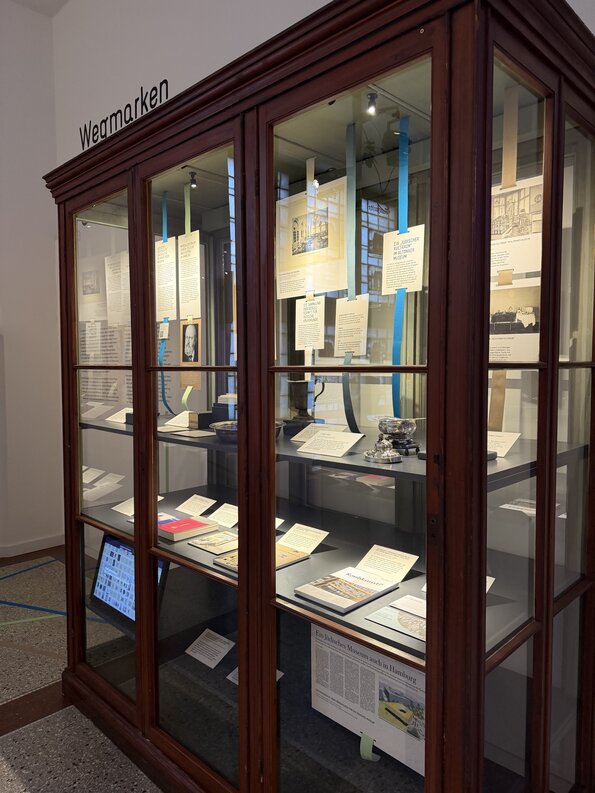

The exhibition is curated by Anne Kunhardt M.A. and Jonas Stier M.A.,who work respectively have worked for the IGdJ, too. Their concept for the project space focusses on 14 selected dates from the period between 1611 and 2020, which were compiled in collaboration with the Institute for the History of the German Jews, the Foundation of Hamburg Memorials and Learning Centres and the Jewish Girls' School Memorial and Education Site. These landmarks represent formative moments in the history of Jewish life in the Hamburg region: from the founding of the Sephardic-Ashkenazi cemetery in Altona and the emergence of Reform Judaism at the beginning of the 19th century, to Hannah Arendt’s reaction to the award of the Lessing Prize and the discussions about rebuilding the Bornplatz Synagogue, which was destroyed by the National Socialists during the November pogroms of 1938 and later had to be demolished with the Jewish Community ordered to bear the costs.
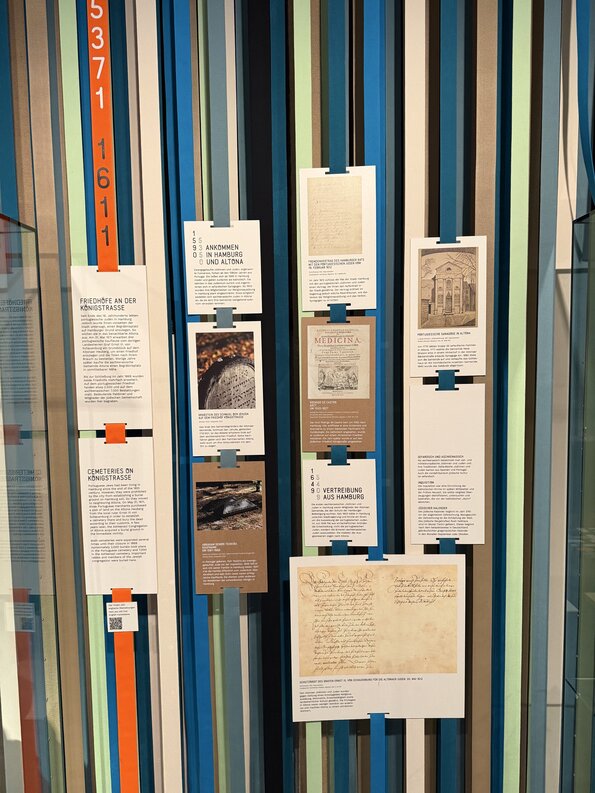
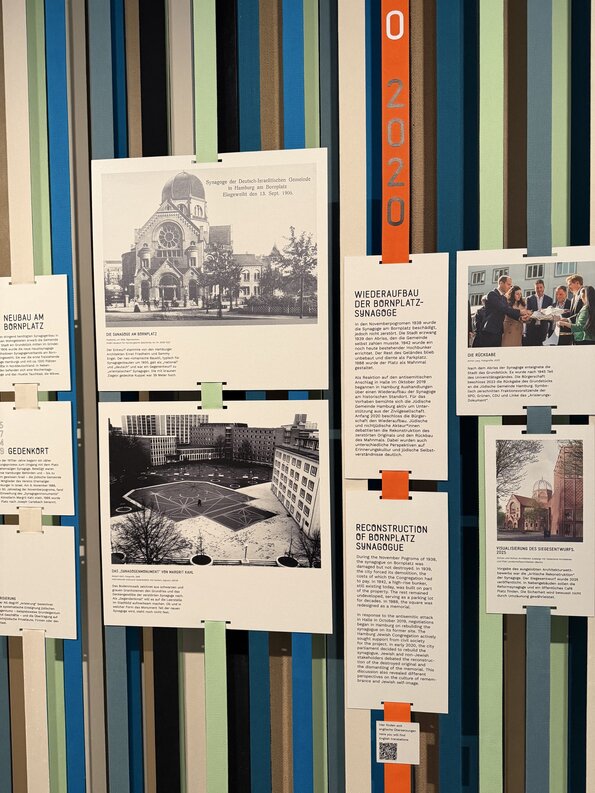
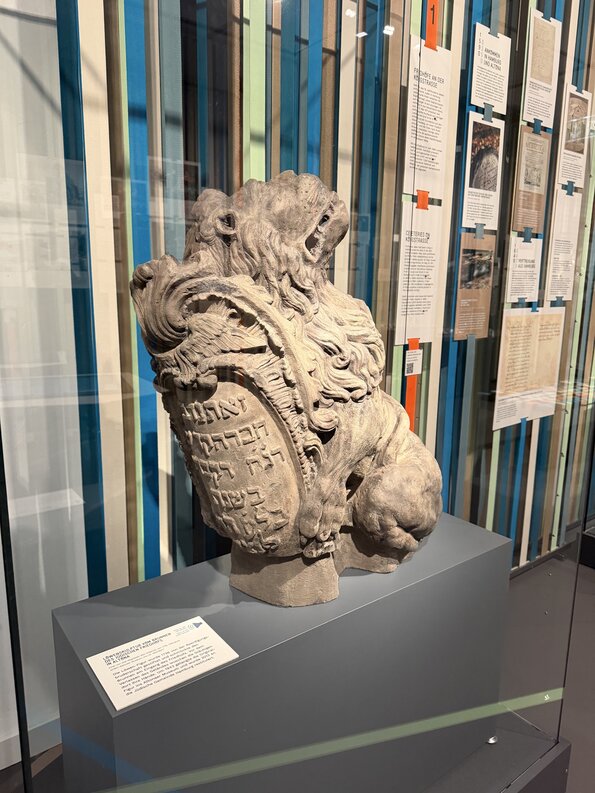
The 14 landmarks of Jewish history aim to show the diversity of Jewish communities in Hamburg and the centuries-old plurality of Jewish life, while also addressing current issues such as migration, inclusion and diversity. Exhibited objects include a model of the synagogue built in 1788 on Elbstraße, a lion sculpture from the fountain in the Jewish cemetery in Altona, commemorative medals from the Israelite Hospital, and silver objects stolen by the Nazis. Audio stations tell the stories behind selected objects and explore the complex paths that led to their inclusion in museum collections, as well as the questions of ownership, responsibility and historical reappraisal that they raise. Finally, a digital city map from the Institute for the History of German Jews shows where Jewish history and life can be experienced in Hamburg today.
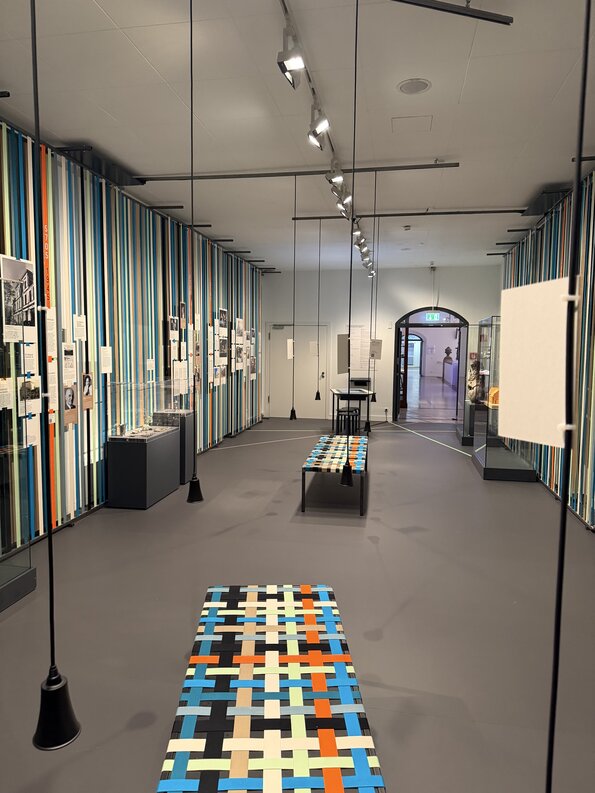
The project space takes up the discussion about the development of a Jewish Museum for Hamburg, which has been ongoing since 2024, and looks back on over a century of debate on this issue. Against this backdrop, the project space also sees itself as a forum for discourse, information and representation, inviting Hamburg's urban society to engage in conversation about the content, perspectives and tasks of a future Jewish Museum.
Fotos: SHMH; Jonas Stier